Maureen will meet you in the moment. The rest is up to you.
You already know your relationship with food is hard, and it may even be a lifelong struggle.
But it can get quieter. More manageable. Maureen has tools built for exactly that.
We won't sugarcoat it or pretend they do the work for you. They don't. You do. All we do here is bring the right tool to the moment you need it. Evidence-based. Frictionless. Built for when it matters most.
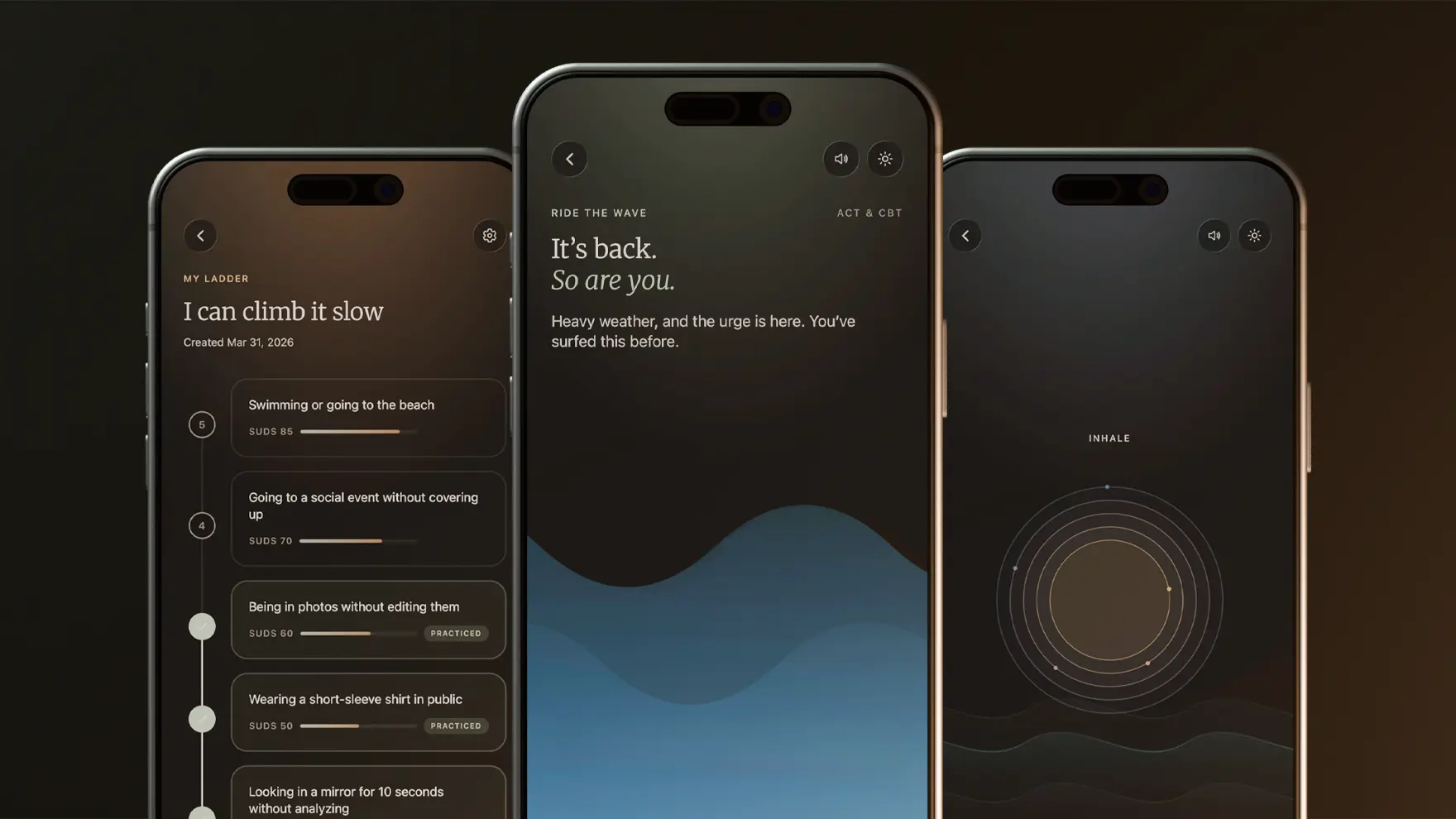
The toolkit is grounded in two of the most researched frameworks in modern psychology: Acceptance and Commitment Therapy (ACT) and Cognitive Behavioral Therapy (CBT). These aren't new approaches. For decades, clinicians have been using them to help individuals manage eating urges, intrusive body image thoughts, and the kind of thinking that doesn't respond to willpower alone.
What Maureen changes is access. Therapy works. We believe that, and Maureen will never seek to replace it. But we also know that the hardest moments don't schedule themselves. They often arrive at 2am, when you're alone, and the people who support you aren't a phone call away.
These tools work. The research is there. All Maureen does is make them available when you need them most.
The delivery is the difference
Most apps for this track the meal. Before, after, what you ate and when. And they reach for the same playbook: streaks, badges, a cheerful mascot that congratulates you for showing up. Gamification borrowed from fitness apps, applied to some of the most difficult experiences a person can have.
Maureen's unit isn't the meal. It's the behavioral moment underneath it. An urge building. Something that happened. A thought that won't stop. The tools that meet you here don't reward engagement. The subtle animations, the haptic feedback, and the audio cues all serve as sensory anchors in moments of distress. Grounding the nervous system through sensory input is part of the technique. In practice, it means you can close your eyes.
What it looks like
Take Urge Surfing. A static worksheet may ask you to write down your urge and rate it on paper. Maureen asks you to first locate where you feel it. Maybe this time it's your chest, your stomach, your hands. Each selection buzzes upon tap. A small confirmation that something real just got named. Then you type it out:
"I notice I'm having the urge to . . ."
After acknowledging it, you watch it either fade and scale out as you hold a button, or surface and fade as you drag a circle along a wave arc. Two ways to create the same distance between you and the thought. Same principle as the worksheet. This way, you can watch the urge move through you.
That wave level carries into the next step, where an animated breathing guide plays for a timer you set, and your urge label moves with the wave and falls as it does. You ride what felt urgent and watch it becomes smaller in real time.
This same intention runs through every tool in Maureen. Breathwork guides you with voice and ambient sound. Cognitive Defusion gives you interactive elements to feel thoughts lose their grip. When you're ready to climb, The Ladder lets you build your own exposure hierarchy, one rung at a time. Futures Mail for writing to yourself further down the road, a letter that arrives when you've had the time to get there.
Between the waves
Beyond the five core practices, Maureen carries more. Peer Groups, where you connect with others walking a similar path, share what's working, and hold space for each other. A Safety Plan, always one tap away . No searching, no navigation, just there when things get serious. Moments, where your weather and session reflections live quietly for two weeks, then make space for what comes next. There's also your Affirmations Wall for the things that keep you anchored: a phrase, a reminder, whatever it is.
Ready when you are.
If you read this far, we'll let Maureen pick it up from here.
Maureen
There when the thoughts get loud.